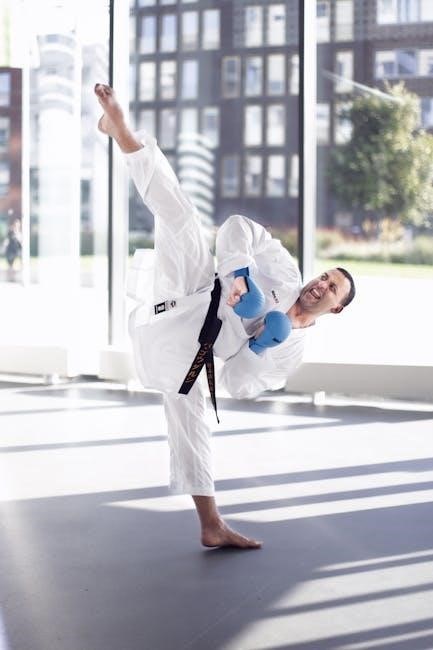
Taekwondo Kicks: A Comprehensive Guide
Taekwondo boasts a diverse array of kicks, readily available with names and illustrative pictures in convenient PDF guides․
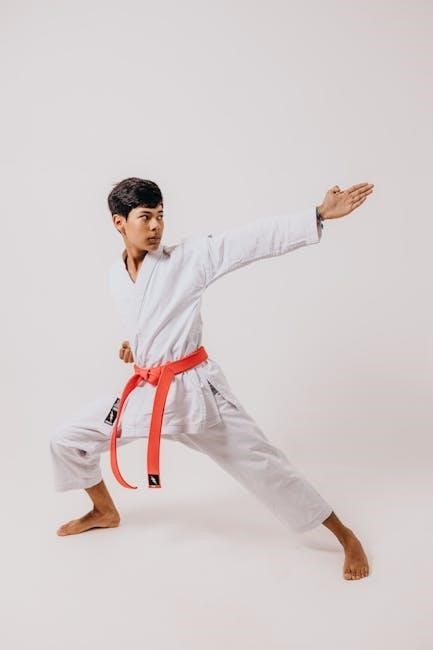
These resources empower practitioners to swiftly master techniques and elevate their skills within this dynamic martial art․
Explore over 20 kicks, from foundational movements like the axe kick and back kick to advanced variations, all detailed for effective learning․
Taekwondo kicks represent the very essence of this dynamic Korean martial art, celebrated for their spectacular power, precision, and variety․ A foundational element of training involves mastering a comprehensive repertoire of kicks, each possessing a unique name – both in Korean and English – and specific application․
Fortunately, numerous resources exist to aid practitioners in this journey, most notably readily available PDF guides․ These invaluable documents typically present each kick with detailed step-by-step instructions, accompanied by clear pictures illustrating proper form and technique․ This visual aid is crucial for understanding the nuances of each movement․
From basic kicks like Ap Chagi (Front Kick) and Dollyeo Chagi (Roundhouse Kick) to more advanced techniques, these PDFs offer a structured learning path․ They often categorize kicks by difficulty, allowing students to progress at their own pace․ Understanding the names and proper execution, supported by visual references, is paramount to success in Taekwondo․
The Importance of Proper Technique
In Taekwondo, executing kicks with correct technique isn’t merely about aesthetics; it’s fundamental to power, accuracy, and, crucially, injury prevention․ While PDF guides showcasing Taekwondo kicks with pictures offer excellent visual learning tools, understanding why each step is vital is paramount․
Incorrect form can diminish a kick’s force, leaving you vulnerable in sparring or self-defense․ More seriously, improper technique places undue stress on joints – ankles, knees, and hips – significantly increasing the risk of strains, sprains, or even long-term damage․
PDF resources, when used correctly, highlight key alignment points and body mechanics․ They demonstrate how proper hip rotation, core engagement, and chambering contribute to a powerful and safe kick․ Simply mimicking the pictures isn’t enough; strive to understand the underlying principles․ Consistent practice under qualified instruction, alongside diligent study of these visual guides, is the key to mastering effective and injury-free Taekwondo kicks․
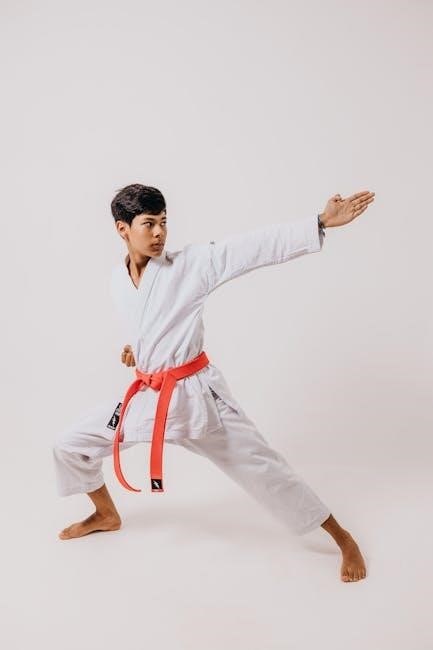
Basic Taekwondo Kicks
Taekwondo fundamentals begin with core kicks – front, roundhouse, side, and back – often detailed in PDF guides featuring pictures․
Mastering these is crucial for progression․
Front Kick (Ap Chagi)
The Ap Chagi, or front kick, is a foundational Taekwondo technique, frequently illustrated in PDF guides with detailed pictures for visual learners․
This kick involves powerfully thrusting the foot forward, targeting the opponent’s midsection or face․
Proper form emphasizes chambering the knee high before extending the leg, maintaining balance, and retracting the leg swiftly․
PDF resources often break down the kick into stages, showing correct body alignment and foot placement․
Beginners often practice with stationary targets, focusing on accuracy and speed․
Advanced practitioners incorporate the front kick into combinations, utilizing its versatility for both offense and defense․
Variations include the snap kick, where the leg retracts quickly, and the pushing kick, delivering a more sustained force․
Many PDF guides also cover common errors and drills to improve technique, ensuring practitioners develop a solid foundation in this essential kick․
Understanding the Korean name, Ap Chagi, alongside the visual aids, enhances learning and retention․
Roundhouse Kick (Dollyeo Chagi)
The Dollyeo Chagi, or roundhouse kick, is a dynamic and powerful Taekwondo technique, extensively documented in PDF training materials with clear pictures․
This kick involves a circular motion of the leg, striking with the instep or ball of the foot․
PDF guides emphasize pivoting on the supporting foot, generating power from the hips, and maintaining a tight core for stability․
Correct form includes chambering the knee and extending the leg in a sweeping arc, aiming for the target’s ribs, head, or arm․
Beginners often practice slow, controlled movements to develop proper technique before increasing speed and power․
Advanced practitioners utilize the roundhouse kick in sparring and self-defense scenarios, adapting it to various situations․
Variations include the inside and outside roundhouse, targeting different areas of the opponent’s body․
PDF resources often detail common mistakes and provide drills to refine technique, ensuring optimal impact and control․
Learning the Korean name, Dollyeo Chagi, alongside visual references, aids in comprehensive understanding and skill development․
Side Kick (Yeop Chagi)
The Yeop Chagi, known as the side kick, is a linear thrusting kick fundamental to Taekwondo, frequently illustrated in detailed PDF guides with accompanying pictures․
This powerful technique utilizes the blade of the foot to deliver a forceful strike, typically targeting the opponent’s torso or head․
PDF resources highlight the importance of maintaining a stable stance, aligning the body, and chambering the knee before extending the leg․
Proper execution involves rotating the hips and driving through the target with controlled power․
Training materials emphasize keeping the kicking leg straight and retracting it quickly after impact․
The side kick is valuable for both offensive and defensive applications, creating distance and disrupting an opponent’s balance․
Variations include the pushing and cutting side kick, each offering unique advantages in different combat scenarios․
PDF guides often include drills to improve flexibility, balance, and targeting accuracy․
Mastering the Yeop Chagi, alongside its Korean nomenclature, enhances a practitioner’s overall Taekwondo skillset․
Back Kick (Dwi Chagi)
The Dwi Chagi, or back kick, is a dynamic and impactful Taekwondo technique, comprehensively detailed in instructional PDFs featuring clear pictures․
This kick involves a 180-degree turn and a powerful thrust delivered with the heel of the foot, often targeting the opponent’s midsection or head․
PDF guides emphasize the crucial role of pivoting on the supporting foot and generating momentum through a full body rotation․
Correct form requires a high chamber, a tight core, and a focused strike․
Training resources highlight the importance of flexibility and balance for safe and effective execution․
The back kick is a versatile technique, useful for both counter-attacks and surprise offensive maneuvers․
Variations include the jumping and spinning back kick, increasing its range and power․
PDF materials often include step-by-step breakdowns and drills to refine technique and improve accuracy․
Understanding the Korean name, Dwi Chagi, alongside visual aids, is key to mastering this essential Taekwondo skill․
Axe Kick (Naeryeo Chagi)
The Naeryeo Chagi, commonly known as the axe kick, is a visually striking and powerful Taekwondo technique, thoroughly illustrated in PDF guides with detailed pictures․
This kick is characterized by a downward, chopping motion resembling an axe, typically delivered with the heel or the blade of the foot․
PDF resources emphasize the importance of lifting the knee high and maintaining a straight leg during the descent for maximum impact․
Proper execution requires significant flexibility and core strength․
Instructional materials often demonstrate how to generate power from the hips and utilize body weight effectively․
The axe kick is frequently used to break boards or target an opponent’s head or shoulder․
Variations include sliding into the kick for increased range and momentum․
PDFs often include drills to improve flexibility, balance, and the accuracy of the downward strike․
Learning the Korean name, Naeryeo Chagi, alongside visual references, is crucial for mastering this dynamic Taekwondo kick․
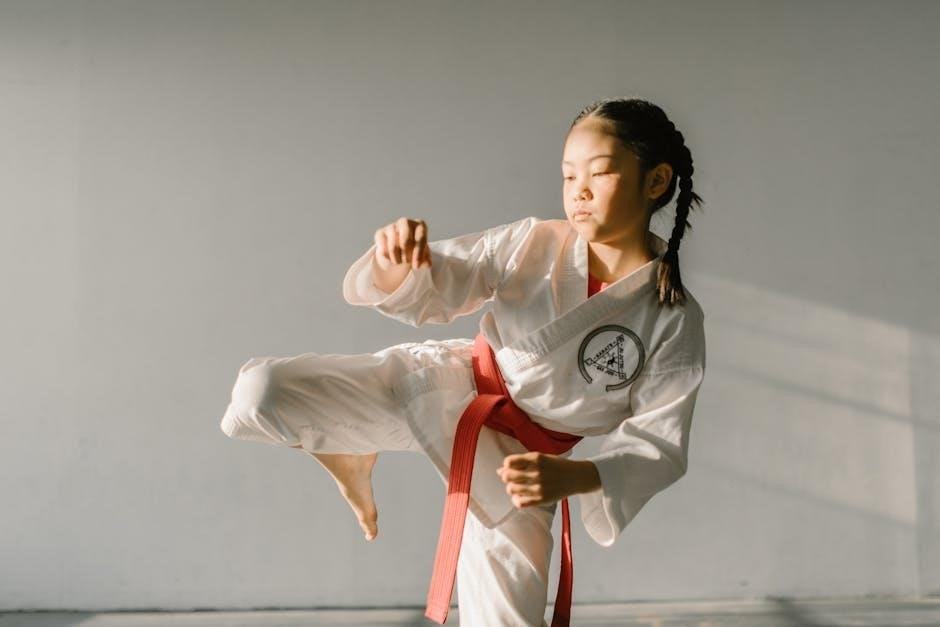
Intermediate Taekwondo Kicks
PDF guides showcase intermediate kicks – turning, hook, crescent, whip, and spinning hook – with detailed pictures and Korean names for focused practice․
Turning Kick (Bandae Dollyeo Chagi)
The Bandae Dollyeo Chagi, or turning roundhouse kick, is a dynamic intermediate Taekwondo technique frequently documented in PDF training materials with accompanying pictures․
These visual guides illustrate the crucial pivoting motion of the supporting foot, enabling a 180-degree turn during the kick’s execution․
Proper form involves chambering the kicking leg, rotating the body, and extending the leg in a circular path towards the target․
PDF resources often break down the kick into phases, highlighting key alignment points and common errors to avoid․
Mastering this kick requires significant flexibility, core strength, and precise timing, all of which are emphasized in detailed instructional pictures․
Practitioners utilize these guides to refine their technique, improve power, and enhance the overall fluidity of the Bandae Dollyeo Chagi․
The Korean name, alongside English translations, aids in understanding and replicating the correct form as presented in these comprehensive PDFs․
Hook Kick (Huryeo Chagi)
The Huryeo Chagi, known as the hook kick, is an intermediate Taekwondo maneuver frequently detailed in instructional PDF guides, often accompanied by illustrative pictures․
These resources emphasize the unique hooking motion of the kick, achieved by bending the knee and drawing the heel towards the target in a sweeping arc․
PDF guides typically showcase the proper stance, chambering technique, and the crucial inward rotation of the leg for maximum impact․
Visual aids, like step-by-step pictures, are invaluable for understanding the complex body mechanics involved in executing a powerful and accurate hook kick․
Practitioners rely on these PDFs to learn the correct trajectory, target areas, and common mistakes to avoid during training․
The Korean name, Huryeo Chagi, is consistently provided alongside its English translation for clarity and proper pronunciation․
Mastering this kick demands flexibility, balance, and precise timing, all effectively conveyed through detailed diagrams and photographic sequences within these learning materials․
Crescent Kick (Gareureo Chagi)
The Gareureo Chagi, or crescent kick, is a visually striking Taekwondo technique extensively documented in PDF training materials, often featuring detailed pictures․
These guides highlight the kick’s arcing trajectory, emphasizing the importance of a smooth, semi-circular motion of the leg․
PDF resources typically break down the crescent kick into phases, illustrating the proper stance, chambering position, and the sweeping leg movement towards the target․
Pictures within these guides demonstrate both the inside and outside crescent kick variations, clarifying the subtle differences in technique and target application․
Practitioners utilize these visual aids to understand the correct hip rotation and body alignment crucial for generating power and accuracy․
The Korean name, Gareureo Chagi, is consistently paired with its English equivalent for easy reference and pronunciation․
These PDFs serve as valuable tools for refining technique, improving flexibility, and mastering this dynamic and versatile kick․
Whip Kick (Chit Chagi)
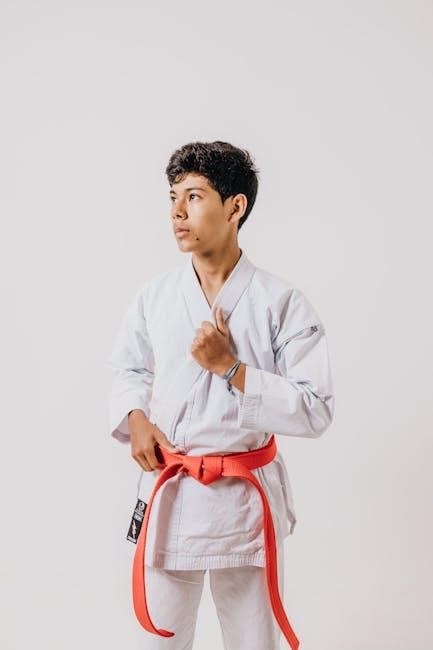
The Chit Chagi, commonly known as the whip kick, is a unique Taekwondo maneuver frequently detailed in instructional PDF guides, complete with illustrative pictures․
These resources emphasize the kick’s distinctive snapping motion, resembling the crack of a whip, and its effectiveness in close-range combat․
PDF materials typically showcase the proper foot position – heel drawn back towards the buttocks – and the rapid extension of the leg towards the opponent․
Pictures within these guides clearly demonstrate the correct body mechanics, including the crucial hip snap and core engagement needed to generate power․
The guides often highlight the target areas for the Chit Chagi, such as the groin or the side of the knee․
The Korean term, Chit Chagi, is consistently presented alongside its English translation for clarity and ease of learning․
These PDFs are invaluable for practitioners seeking to understand and master this deceptively powerful and precise kick․
Spinning Hook Kick (Dwi Huryeo Chagi)
The Dwi Huryeo Chagi, or spinning hook kick, is a visually striking and powerful technique extensively covered in Taekwondo instructional PDFs, often featuring detailed pictures․
These guides emphasize the full 360-degree rotation of the body, combined with the hooking motion of the leg, to deliver a devastating blow․
PDF resources typically break down the technique into sequential steps, illustrating the initial pivot, the spinning motion, and the final impact point․
Pictures clearly demonstrate the correct body alignment, the chambering of the leg, and the crucial hip rotation required for maximum power and accuracy․
The guides often highlight common errors, such as insufficient rotation or improper foot positioning, and provide corrective drills․
The Korean name, Dwi Huryeo Chagi, is consistently paired with its English translation for easy comprehension․
Mastering this kick, as shown in these PDFs, requires significant practice and coordination, making these visual aids essential for practitioners․
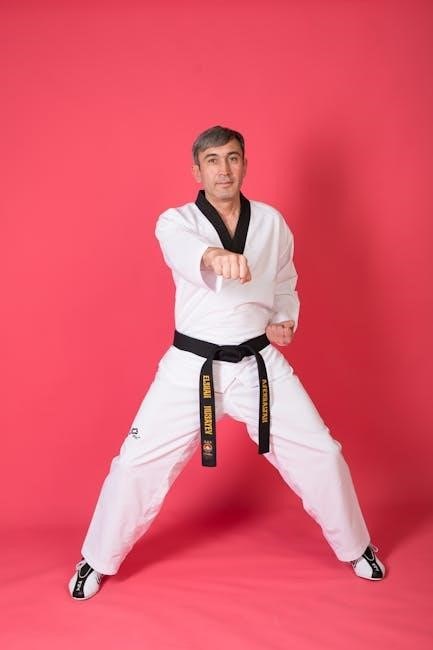
Advanced Taekwondo Kicks
PDF guides showcase complex Taekwondo kicks with detailed pictures, including jumping and flying techniques․
These resources illustrate names and proper form for mastery․
Jumping Front Kick (Nareo Ap Chagi)
The Nareo Ap Chagi, or Jumping Front Kick, is an advanced Taekwondo technique demanding significant power and precision․
PDF guides featuring pictures are invaluable for understanding its execution, breaking down the jump, chambering, and extension phases․
These resources clearly illustrate the correct body alignment, crucial for maximizing impact and minimizing risk of injury․
Practitioners begin by generating upward momentum, simultaneously bringing the kicking leg into a tight chamber․
Upon reaching peak height, the leg extends forcefully towards the target, maintaining a straight line from hip to toe․
Landing requires controlled absorption of impact, returning to a balanced stance․
Variations include single and double leg jumps, influencing the kick’s range and speed;
Mastering this kick requires consistent practice and attention to detail, utilizing visual aids from PDFs to refine technique․
Proper form ensures both effectiveness and safety during sparring or demonstrations․
Jumping Roundhouse Kick (Nareo Dollyeo Chagi)
The Nareo Dollyeo Chagi, or Jumping Roundhouse Kick, is a dynamic and powerful Taekwondo technique, often featured in advanced PDF training materials with detailed pictures․
These visual guides are essential for grasping the complex coordination required for a successful execution․
The kick initiates with a jump, followed by a rapid rotation of the hip and leg, delivering a circular impact․
Proper chambering is vital, bringing the knee high and pivoting on the supporting foot to generate rotational force․
The leg extends horizontally, striking with the instep or ball of the foot, aiming for the target’s midsection or head․
Maintaining core stability throughout the jump and rotation is crucial for balance and power․
Landing should be controlled, absorbing the impact with a slightly bent knee․
PDF resources often showcase variations, including single and double leg jumping techniques․
Consistent practice, guided by visual references, is key to mastering this impressive and effective kick․
Jumping Side Kick (Nareo Yeop Chagi)
The Nareo Yeop Chagi, or Jumping Side Kick, is a visually striking and potent Taekwondo maneuver, frequently detailed in instructional PDF guides complete with illustrative pictures․
These resources are invaluable for understanding the precise body mechanics involved․
This kick begins with a jump, simultaneously bringing the knee upwards and outwards, preparing for the side-on extension․
The supporting leg drives upwards, propelling the body into the air, while the kicking leg extends powerfully to the side․
Impact is made with the blade of the foot, targeting the opponent’s torso or head․
Maintaining a tight core and a straight back throughout the jump and kick is essential for stability and power․
A controlled landing, absorbing the impact, completes the technique․
PDF materials often demonstrate variations, emphasizing proper alignment and force generation․
Dedicated practice, utilizing visual aids, is crucial for developing accuracy and effectiveness with this advanced kick․
Flying Back Kick (Pyeon Dwi Chagi)
The Pyeon Dwi Chagi, or Flying Back Kick, represents a spectacular and challenging Taekwondo technique, often comprehensively illustrated in PDF guides featuring detailed pictures․
These visual resources are essential for grasping the complex sequence of movements․
This kick initiates with a turning jump, pivoting 360 degrees in the air while simultaneously executing a back kick․
The practitioner launches off the supporting leg, rotating rapidly to deliver a powerful heel strike to the opponent’s head or torso․
Maintaining balance during the rotation is paramount, requiring significant core strength and coordination․
PDF guides often break down the technique into phases, highlighting proper body positioning and timing․
Successful execution demands precise control and a strong understanding of rotational mechanics․
Landing safely requires careful preparation and a controlled descent, absorbing the impact effectively․
Consistent practice, aided by visual references, is key to mastering this dynamic and impressive kick․
360 Kick (Dollyeo Chagi with Full Rotation)
The 360 Kick, a variation of the Dollyeo Chagi (Roundhouse Kick), is a visually striking technique frequently detailed in Taekwondo PDF guides with accompanying pictures․
These guides are invaluable for understanding the full rotational aspect of this advanced kick․
Unlike a standard roundhouse, this kick involves a complete 360-degree spin in the air before landing․
The practitioner initiates the spin with a powerful jump and a focused gaze, maintaining balance throughout the rotation․
The kicking leg extends during the spin, delivering a forceful strike with the instep or ball of the foot․
PDF resources often emphasize the importance of core engagement and precise timing for a successful execution․
Mastering this kick requires significant flexibility, coordination, and spatial awareness․
Landing requires controlled deceleration and a stable base to prevent loss of balance․
Consistent practice, guided by visual aids, is crucial for developing the technique and maximizing its power and accuracy․
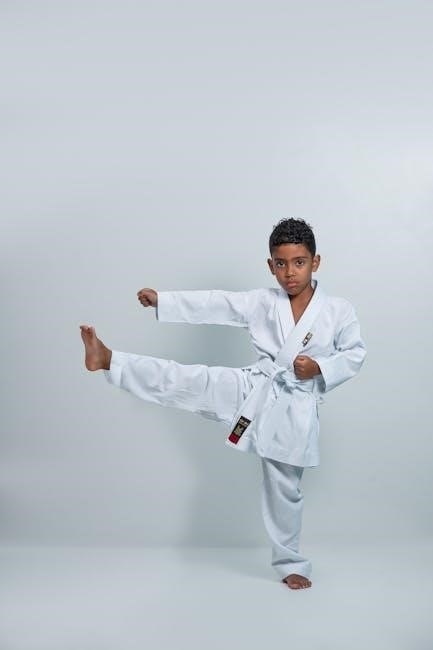
Kick Variations & Combinations
Taekwondo PDF guides showcase diverse kick variations – Inside/Outside Crescent Kicks, and powerful double kick sequences․
Pictures illustrate effective combinations, like Front Kick-Roundhouse Kick, for sparring and self-defense mastery․
Inside Crescent Kick
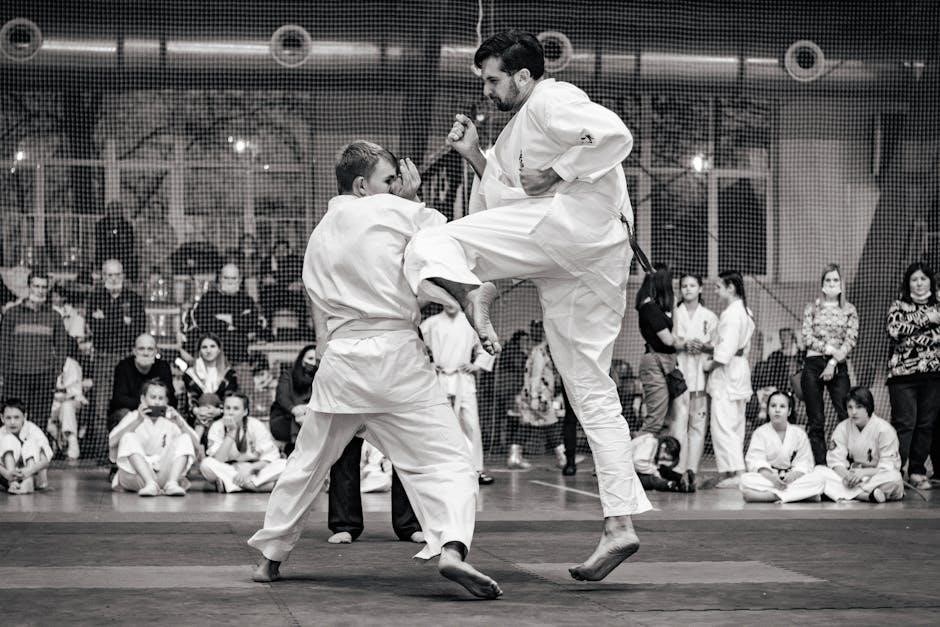
The Inside Crescent Kick (An Chagi) is a dynamic Taekwondo technique, often detailed with clear pictures in comprehensive PDF training manuals․
This kick involves a circular trajectory, sweeping inwards from the outside towards the center line of the opponent․ It’s a versatile move, effective for disrupting balance and creating openings․
PDF guides typically illustrate the proper form: a chambering motion, a smooth arc with the instep or heel, and a controlled retraction․ Beginners often practice this kick slowly, focusing on maintaining a stable stance and accurate targeting․
Advanced practitioners integrate it into flowing combinations, utilizing its deceptive speed and range․ The kick’s power derives from hip rotation and core engagement, aspects emphasized in instructional PDFs․
Variations exist, including those targeting different heights and utilizing different striking surfaces․ Mastering the An Chagi requires consistent practice and attention to detail, as shown in visual PDF resources․
Outside Crescent Kick
The Outside Crescent Kick (Bakat Chagi) is a visually striking Taekwondo technique, frequently illustrated with detailed pictures in readily available PDF guides․
Unlike its inside counterpart, this kick arcs outwards, sweeping from the center line towards the opponent’s periphery․ It’s known for its deceptive trajectory and ability to bypass guards․
PDF training materials emphasize the importance of proper chambering, a fluid circular motion, and a focused striking surface – typically the instep or ball of the foot․ Beginners benefit from slow, controlled repetitions, concentrating on balance and accuracy․
Advanced practitioners seamlessly integrate the Bakat Chagi into complex combinations, exploiting its reach and speed․ Hip rotation and core stability are crucial for generating power, as highlighted in instructional PDFs․
Variations target different levels and utilize diverse striking points․ Consistent practice, guided by visual PDF resources, is key to mastering this effective kick․
Double Kicks
Double Kicks, often demonstrated with clear pictures in Taekwondo training PDFs, represent a rapid-fire sequence of two consecutive kicks delivered with the same leg․
These combinations demand exceptional speed, coordination, and stamina, making them a challenging yet rewarding skill to master․
Common pairings include Front Kick – Front Kick, Roundhouse Kick – Roundhouse Kick, or variations combining different kick types․ PDF guides often break down the technique into phases: the initial kick, swift leg recovery, and immediate launch of the second kick․
Maintaining balance throughout the sequence is paramount, requiring a strong core and precise footwork․ Visual aids in PDFs illustrate proper body alignment and weight distribution․
Drills focus on increasing the speed and fluidity of the transition between kicks․ Advanced practitioners incorporate double kicks into sparring and forms, showcasing their dynamic power and control․
Combination Kicks (e․g․, Front Kick ౼ Roundhouse Kick)
Combination Kicks, frequently illustrated with detailed pictures in Taekwondo PDF training materials, involve seamlessly linking two or more different kicks into a fluid sequence․
A classic example, the Front Kick – Roundhouse Kick, demonstrates this principle, requiring practitioners to transition smoothly between techniques․
PDF guides often emphasize the importance of maintaining balance and generating power throughout the combination․ They break down each kick individually, then illustrate how to connect them, focusing on weight transfer and body mechanics․
Other common combinations include Side Kick – Roundhouse Kick, or Back Kick – Front Kick․ These sequences are vital for sparring, allowing for varied attacks and exploiting opponent openings․
Effective combination kicks demand precise timing and coordination, honed through repetitive drills․ Visual references in PDFs aid in understanding proper form and maximizing impact․
Resources & Further Learning
Explore comprehensive Taekwondo kicks PDF guides, offering names and pictures for detailed study․
Discover online tutorials and Kukkiwon standards to refine your technique and advance your skills․
Taekwondo Kicks PDF Guides
Numerous PDF guides are readily available online, serving as invaluable resources for Taekwondo practitioners seeking to deepen their understanding of various kicks․
These guides typically present a comprehensive list of kicks, complete with both their Korean and English names, ensuring clarity and accessibility for students of all levels․
Crucially, most guides include detailed pictures or diagrams illustrating the correct form and execution of each kick, aiding in visual learning and technique refinement․
You can find PDFs covering basic kicks like the front kick (Ap Chagi), roundhouse kick (Dollyeo Chagi), and side kick (Yeop Chagi), as well as more advanced techniques such as the axe kick (Naeryeo Chagi) and spinning hook kick (Dwi Huryeo Chagi)․
These resources often categorize kicks by difficulty level, allowing practitioners to progressively challenge themselves and build a solid foundation․
Searching for “Taekwondo kicks chart PDF” or “Taekwondo kicks names with pictures PDF” will yield a wealth of options for further exploration․
Online Taekwondo Kick Tutorials
A plethora of online Taekwondo kick tutorials offer dynamic, visual learning experiences, complementing static PDF guides․
Platforms like YouTube host countless videos demonstrating proper technique, often breaking down each kick into manageable steps with slow-motion replays․
Many tutorials feature experienced instructors providing verbal cues and corrections, enhancing understanding and preventing common errors․
These resources frequently cover kicks alongside their Korean names, reinforcing terminology and cultural context․
You’ll find tutorials for foundational kicks – front, roundhouse, side – and more complex maneuvers like jumping and spinning techniques․
Some channels offer comprehensive series, guiding students through a progressive curriculum, while others focus on specific kicks with detailed analysis․
Searching for “Taekwondo kick tutorial” or “Taekwondo kicks names and technique” will reveal a vast library of instructional videos, often including pictures and diagrams for enhanced clarity․
Kukkiwon Kick Standards
The Kukkiwon, Taekwondo’s governing body, establishes standardized techniques for all kicks, often documented in detailed manuals and PDF resources․
These standards define the correct form, trajectory, and application of each kick, ensuring consistency across the art globally․
Currently, the Kukkiwon recognizes 10 basic kick skills, each potentially having specialized variations – known as Special Kick Skills․
PDF guides outlining these standards typically include clear pictures and diagrams illustrating the proper execution of each kick, alongside their Korean names․
These resources are invaluable for instructors and students aiming for precise technique and adherence to official Taekwondo curriculum․
Understanding the Kukkiwon standards is crucial for preparing for Taekwondo examinations and competitions․
The standards cover aspects like chambering, impact point, and follow-through, providing a comprehensive framework for mastering each kick, from Ap Chagi to complex spinning techniques․